
When People Believe in You: What Brands Do With Goodwill
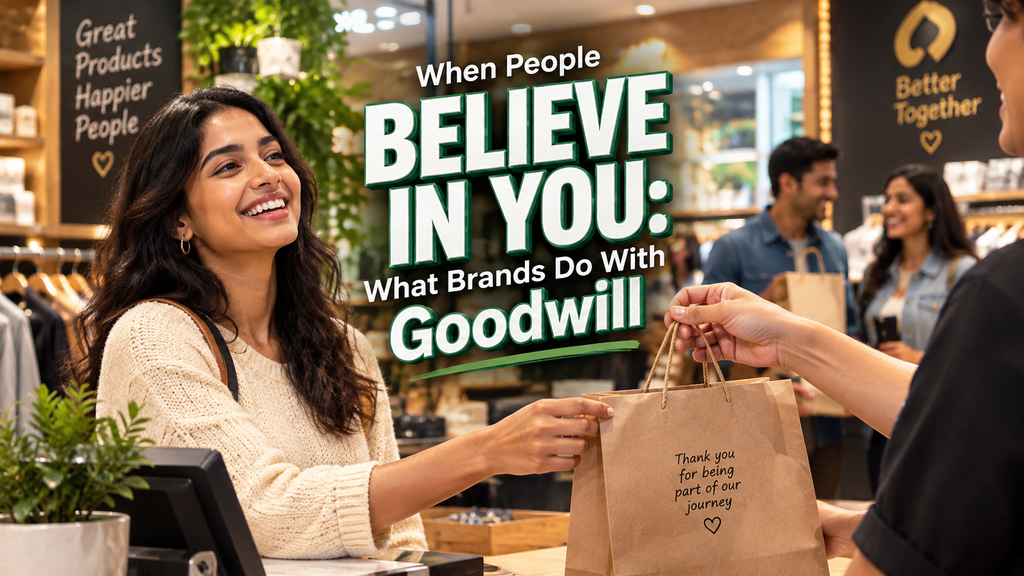
Picture two brands. Both post the exact same message on the same day:
“A flood has hit a nearby town. We’re collecting essentials. Can you help?”
The first brand’s post is flooded with replies. Donations pour in, people share it with their families, and a few even show up to help pack boxes. Within a day, they’ve got more than they asked for.
The second brand gets a handful of likes and a “thoughts and prayers” comment. That’s it.
Same ask. Same cause. Wildly different response. Why?
Because one of them had something the other didn’t. Goodwill.
Goodwill is a balance, not a megaphone
Here’s the thing most brands get wrong. They treat their audience like a megaphone, a big crowd they can point at any cause whenever they feel like it. But goodwill doesn’t work like that.
Think of it as trust sitting in a bank account. Every honest reply is a deposit. So is every promise kept, every mistake owned and every bit of real value given without asking for anything back. And when you ask people to care about something, that’s a withdrawal.
Brands that keep withdrawing without depositing eventually find the account empty. And no clever caption can fix that.
So how does goodwill get built?
You’ve probably noticed a pattern if you’ve read my earlier posts. It’s the same boring, wonderful stuff. Making content for your actual audience instead of chasing views. Being honest when a polished statement would be easier. Treating people as people, not as numbers.
Goodwill is what’s left over when the ads and the PR stop working. It’s the reason someone stands up for a brand in the comments without being asked.
The trap: cause-washing
Now, here’s where it gets tempting.
You’ve built up some goodwill, and a trending cause appears. So you slap it on a post, add a hashtag and a branded graphic, and watch the engagement roll in. Then, a week later, you disappear.
People notice. We’ve spent years learning to spot ads, then polished PR, and now we’ve got a sharp eye for this too. A brand that picks up a cause for attention and drops it just as fast hasn’t used its goodwill, it’s burned it. And that stings more than saying nothing at all.
What using goodwill greatly looks like:
- Choose causes that connect to what you actually do. A food brand fighting hunger makes sense. A fashion brand suddenly championing something random doesn’t.
- Be specific about where things go. “Every order funds one meal” beats “we’re giving back.”
- Keep the ask small. “Share this”, “donate any amount” and “sign this” are easy steps people actually take.
- Report back. Nothing builds more trust than “here’s what your help did.”
- Stay in it for the long haul. One campaign is a moment, while consistency is a reputation.
If you’re a small business
Your community already knows your face, which is a huge head start. Support the causes right outside your door, like a local school, a neighborhood cleanup or a family down the street who needs a hand. Show up yourself instead of just posting about it. Customers who see you actually there will give you something no ad can buy: loyalty that lasts.
If you’re a creator
Your audience follows you, not a logo, so when you ask, it feels personal, and that’s a responsibility. Be careful not to turn their loyalty into a prop. If you rally people for a cause, be open about how it works, who benefits, and what you’re getting out of it, if anything. One badly handled fundraiser can undo years of trust, and one honest one can strengthen it for years.
If you’re a bigger brand
You have the reach, the budget and the power to move mountains, and that’s exactly why people expect more from you. They’ll look closer, ask harder questions, and forgive less. So skip the vague statement and put real numbers, timelines and follow-ups behind your commitments. Scale doesn’t excuse a shallow effort. It raises the bar.

Back to those two posts
Remember the flood appeal that got a flood of support, and the one that got silence?
Neither brand asked differently. One had simply spent years earning the right to ask.
“Goodwill isn’t something you spend. It’s something people trust you to look after.”